
Written by our lead diver at Scuba Space, a PADI Master Scuba Diver and Law Enforcement Public Safety Diver with 12+ years of professional underwater operations experience.
As you prepare to explore the amazing underwater environment, you’ll find that having the right equipment makes all the difference.
Scuba fins are one of the most important pieces of equipment you’ll own. They’re your personal turbo boosters, converting your wobbly human legs into powerful underwater propellers.
This guide on scuba fin types will break down the key differences so you can find the perfect fit for your diving style.
Let’s get into it!
Interested in diving? Learn about scuba certifications here:
*Scuba Space is a participant of affiliate programs and earns from qualified purchases*
What is a Scuba Fin?
Simply put, a scuba fin is a fancy piece of footwear that gives you propulsion underwater.
Your legs are already pretty good at kicking, but fins turn that simple motion into a super-efficient glide to save you energy and (more importantly) air. This leaves your hands free to take photos and give enthusiastic “okay” signals.
While you may have heard them called “scuba flippers,” the cool kids in the diving world always call them “fins.”
Scuba Fin Types Part 1: Foot Pockets
The foot pocket is where you and your fin become one, so it’s a huge deal for comfort and power transfer. It’s the first decision you’ll make and it’s a choice that determines your entire relationship with the fin. You’ve basically got two options:
Closed-Heel Fins / Full-Foot Fins
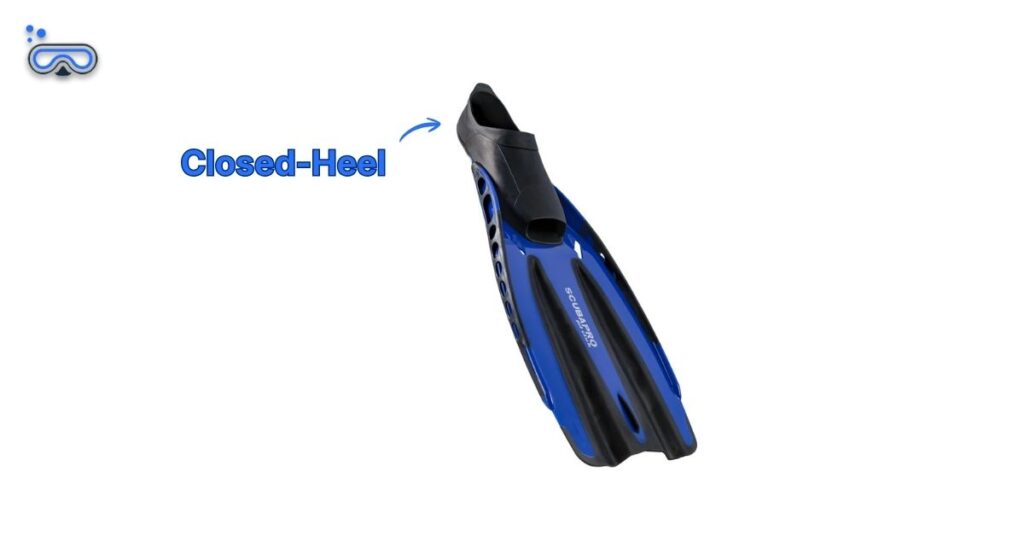
These fins are a single, sleek unit with no straps or adjustments, just a comfy pocket for your bare foot. The design is a solid extension of your leg, meaning all your kicking power goes straight into the blade for maximum thrust. They’re basically the scuba equivalent of a running shoe. Simple, streamlined, and ready to go.
Because of their lightweight and compact design, these fins are best for tropical trips. They’re fantastic if you’re a minimalist diver and don’t plan on walking on anything sharp. Just slip them on and you’re in vacation mode.
Pros:
- Lightweight and Travel-Friendly: They won’t eat up your baggage weight allowance.
- Streamlined Fit: No straps means no fuss and a seamless fit that feels like part of your foot.
- Generally Inexpensive: They are generally less expensive than open-heel fins.
Cons:
- Limited Versatility: Not designed for cold water.
- Sizing Is Crucial: There’s no adjusting them, so a perfect fit is a make-or-break deal.
- Lack of Foot Protection: They give you no foot protection, so watch out for sharp rocks during shore entries.
I’ve never been able to get a good fit with full-foot fins while barefooted. My advice would be to use a pair of thin water socks with you to help with the fit. This is especially true if you’re going to be renting fins. Sizes at shops are sometimes limited and I’ve make do with fins that weren’t properly fitted before.
Editor’s Note
Open-Heel Fins
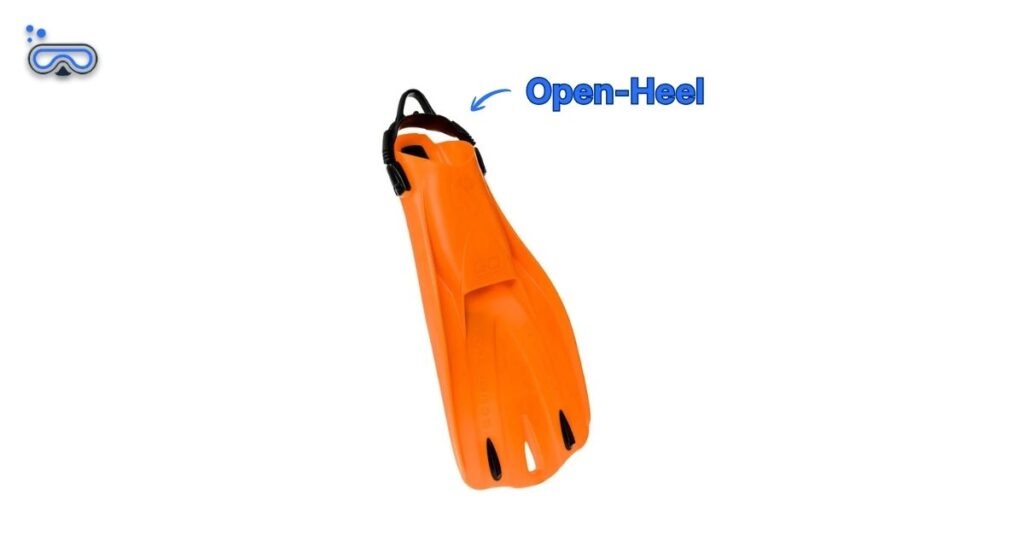
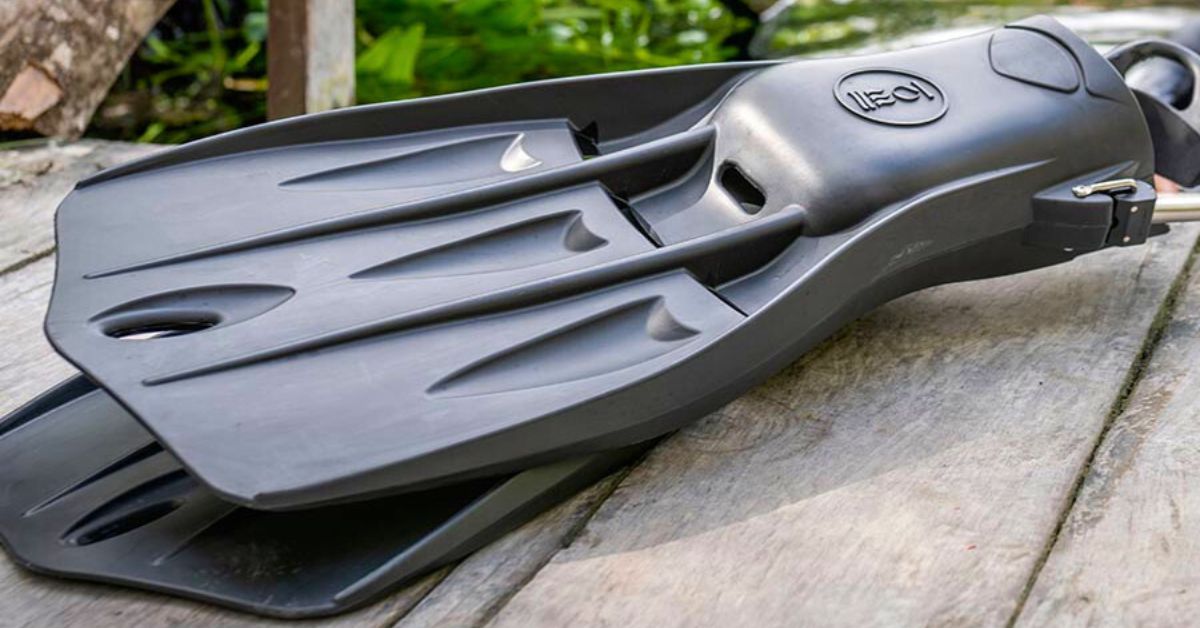
Open-heel fins are the “go anywhere, do anything” option, and they require a separate dive bootie. The adjustable strap lets you get a perfect, secure fit. The blades are typically bigger and stiffer, designed to move some serious water with each powerful kick. They’re the workhorse of the fin world.
These fins are the most versatile choice for any diving environment. If you’re planning on diving in cold water or plan on doing a shore entry over a bunch of sharp rocks, you’ll be glad you have the protection of dive booties.
Pros:
- All-Purpose Versatility: They’re great for every type of dive, from cold lakes to tropical reefs.
- Adjustable for Perfect Fit: The straps let you dial in the comfort and fit perfectly every single time.
- Adds Protection and Warmth: Booties keep your feet toasty and safe from whatever gnarly stuff is on the ground.
Cons:
- Strap Can Break: A strap breaking is a real-world problem that can totally ruin a dive.
- Higher Initial Cost: You’ll have to buy the fins and the booties, so your wallet will feel it.
Strap breakage is a real thing. I’ve seen my fair share of plastic buckles failing. Just upgrade them right away and go for the bungee/spring. My personal preference is spring. To be fair, I did break my bungee strap once, but it was just the loop hole in the back that tore. The bungee continued working just fine.
Editor’s Note
Scuba Fin Types Part 2: Fin Blades
The fin blade is the engine of your fin. Its shape, size, and design determine everything from your cruising speed to how tired your legs will feel after the dive. There is a surprising variety of designs, ranging from traditional to highly specialized.
Paddle Fins

Paddle fins are the timeless classic. They’re a single, solid piece designed to push as much water as possible. The power you generate from your legs goes straight into that big surface area, giving you powerful thrust with every kick.
These fins are a great choice for divers who like a traditional kicking style and want a fin that just works. They’re the no-nonsense choice, favored by dive professionals who need maximum control and thrust to move against currents or perform difficult maneuvers.
Paddle fins can have vents, channels, or no extra features.
Pros:
- Durable Design: They’re basically a single piece of plastic, so they’re incredibly tough and reliable.
- Efficient with Proper Kick: When you kick correctly, you’ll get a powerful and satisfying push every time.
- Excellent Feedback: You can really feel the resistance, so you know exactly how much power you’re generating.
Cons:
- High Leg Strain: They can be a workout, so your legs might get tired on long or difficult dives.
- Require Strong Kick: They won’t get you far with a lazy, half-hearted kick.
- Can Be Hard on Joints: If your form isn’t great, you might feel some strain on your ankles and knees.
Channel Fins
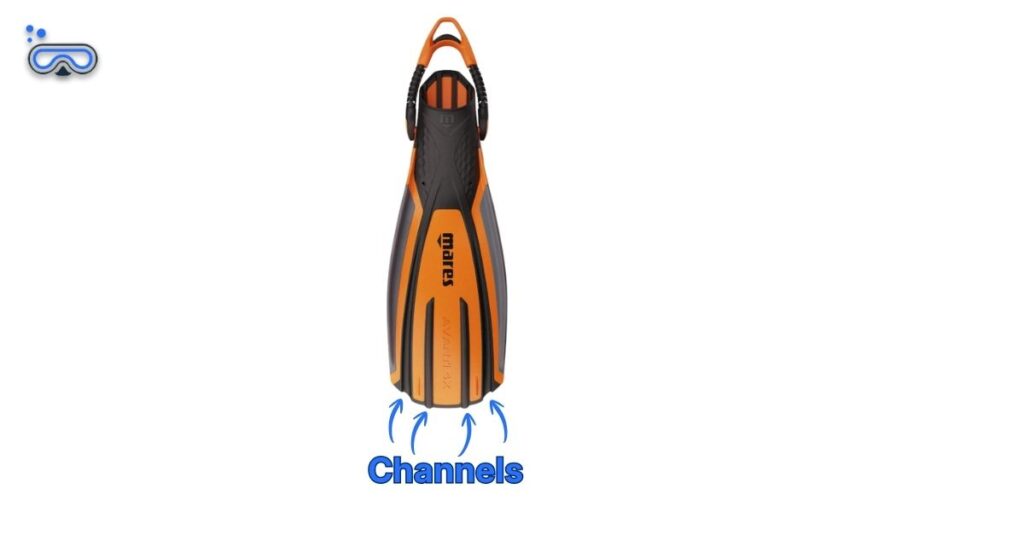
Channel fins are like the paddle fin’s slightly smarter, more efficient cousin. They have clever ridges or channels built into the blade that are designed to guide the water flow. Instead of the water just spilling off the sides, it’s funneled down the length of the fin, creating more focused and powerful thrust.
These fins are designed for divers who want more oomph without changing their kicking style. They’re a nice middle ground for divers who want a little more propulsion and a little less work than a basic paddle fin but still appreciate the traditional feel.
Pros:
- Increased Propulsion: The channels give you a little extra push with less effort.
- Great Balance of Power: They give you a sweet spot between power and energy conservation.
- Familiar Feel: They feel a lot like traditional fins, so there’s no learning curve.
Cons:
- Higher Cost: All that extra engineering means they’ll likely cost you more.
- Less Durable: The more complex design has a few more parts that could potentially break or rip.
- May Not Be Noticeable: Depending on your kicking style, you might not even notice the benefits.
Vented Fins
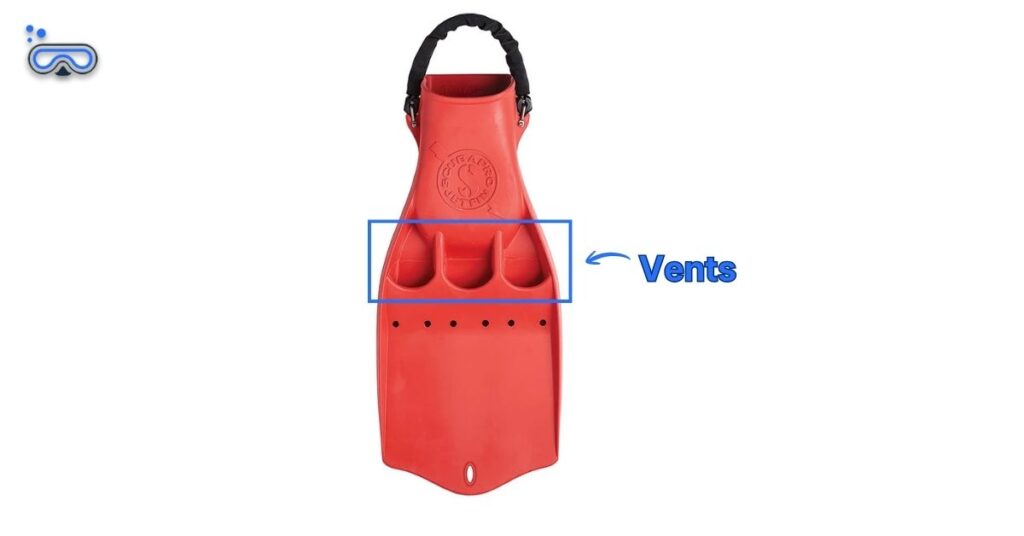
The mechanical principle of a vented fin is to let some of the pressure off. The vents or slits near the foot pocket allow water to pass through the blade on the upstroke of your kick. This reduces the drag you would normally feel on the return kick, making for a smoother, less tiring motion.
These fins are a popular choice for divers who want to conserve energy and reduce leg fatigue. If you have a weaker kick or your legs tire out quickly, these fins are designed to make your dive a lot more comfortable.
Pros:
- Reduces Leg Strain: The vents make the upstroke feel much lighter, so your legs won’t burn out as fast.
- More Comfortable Dive: They’re designed to make your kicks feel effortless, saving your strength and air.
- User-Friendly: The reduced resistance makes them feel very easy to use from the start.
Cons:
- Lower Efficiency: All that venting can also reduce the power on the downstroke, so you might not go as fast.
- Minimal Gains for Strong Kickers: If you already have a powerful kick, you might not notice a difference.
- Less Powerful: They’re generally not the best choice for fighting strong currents.
Split Fins
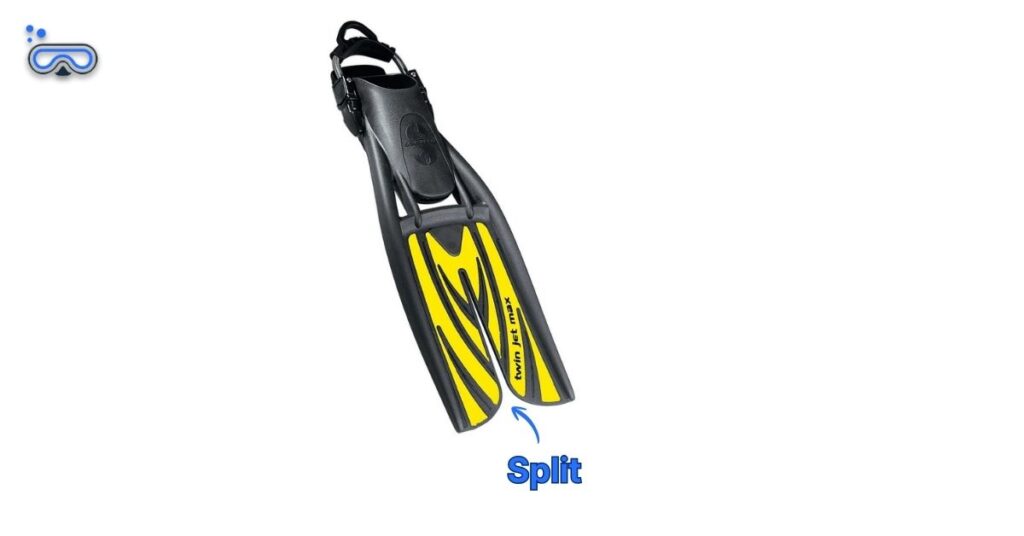
Split fins look unlike anything else, with a distinct split down the middle of the blade. They operate like a propeller, with the two halves creating a swirling vortex of water that pulls you along. This propulsion method works best with a fast, light flutter kick.
Split fins are perfect for divers who want a low-impact kick and a smooth ride. They’re a favorite among underwater photographers and videographers who need to move slowly and precisely to avoid stirring up sand or startling marine life.
Pros:
- Extremely Easy on Legs: The propeller-like motion is super gentle, so you’ll feel almost no strain.
- Great for Flutter Kick: They’re perfectly designed for a fast, light, and low-effort kicking style.
- Good for Joint Problems: They’re a popular choice for divers with bad knees or ankles.
Cons:
- Poor for Strong Currents: They won’t give you the power you need to fight a strong current.
- Difficult to Maneuver: Good luck backing up or maneuver in tight spaces with these.
- More Expensive: They are generally more expensive than a traditional paddle fin.
Hinge Fins
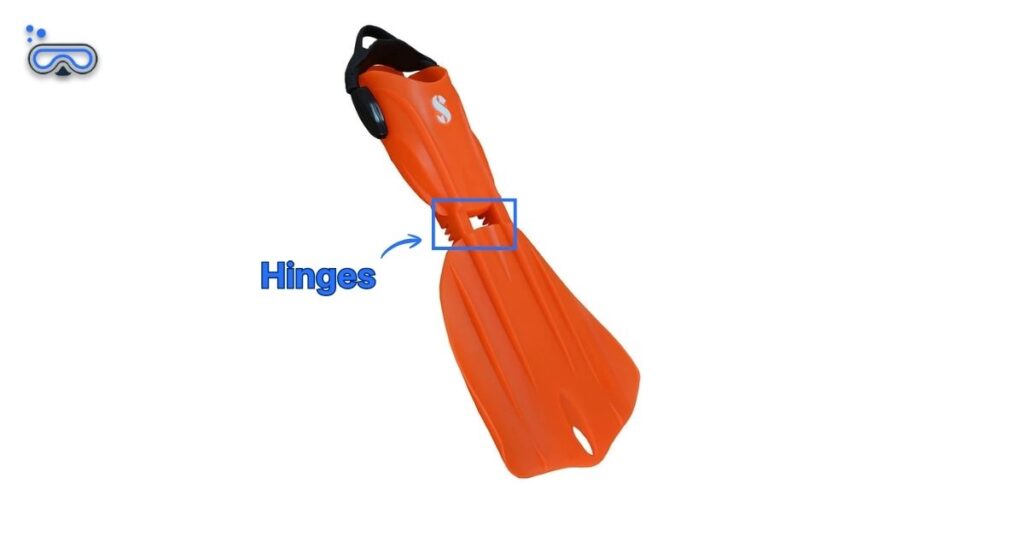
Hinge fins, or articulated fins, are the high-tech, mechanical marvels of the fin world. They have a joint or hinge built into the blade that allows it to flex and change its angle throughout the kick. The idea is to optimize the blade’s angle for maximum power and minimal wasted energy.
These fins are for divers who love gadgets and want to squeeze every last bit of power out of their kicks. If you’re a diver who wants to reduce strain on your ankles and knees and is willing to invest in a more complicated piece of gear, this might be your fin.
Pros:
- Increased Propulsion: The hinge helps the fin maintain the perfect angle to generate incredible thrust.
- More Power, Less Effort: Some divers feel they get a bigger boost for the same amount of effort.
- Reduced Strain: The design is engineered to be as easy on your joints as possible.
Cons:
- Mechanical Failure Risk: All those moving parts mean there’s a higher chance of something breaking.
- Higher Maintenance: The complexity means they’ll need more care than a simple fin.
- Higher Cost: These are often the most expensive fins on the market.
Things to Look For
No matter which style you choose, here are some things you’ll want to keep in mind:
Fit and Sizing: This is the most important part! A fin that’s too loose or too tight will be a nightmare. If you’re buying open-heel fins, make sure you try them on with your dive booties for that perfect, Cinderella-like fit.
Blade Stiffness: This is all about your personal preference. A softer blade is like a comfy walking shoe, easy on your legs. A stiffer blade is like a sports car, it gives you more power but requires more effort.
Weight: Keep this in mind if you’re a travel fiend. Those heavy fins might eat up a ton of your baggage weight, so choose wisely!
Strap Type: For open-heel fins, look for bungee or spring straps. They’re way more durable and are much easier to slip on and off when you’re on a crowded dive boat.
Fin Length and Shape: Longer fins are perfect for cruising around, but if you plan on exploring shipwrecks or caves, a shorter fin will give you better maneuverability.
Common Questions About Scuba Fins for Beginners
Can I use snorkeling fins for scuba diving?
Generally, no. Snorkeling fins are too flexible for the weight of scuba gear. Scuba fins are stiffer and designed for the power needed to move a diver and their equipment.
Why do some divers choose spring straps or bungee straps?
Spring and bungee straps are self-adjusting and easier to use with one hand or gloves compared to traditional rubber buckle straps.
Are split fins better for beginners?
Split fins are easier on the joints and legs, but they are less versatile for advanced kicking techniques like frog kicking. Most beginners start with paddle or channel fins.
Wrapping Up
I started off with the Mares Avanti Quattro +. I did a ton of research before starting my Open Water cert and the consensus was that those fins were excellent. They served me well in the first half of my diving journey. Eventually, I grew tired of them getting caught up on everything at the bottom of lakes while I was conducting searches. I moved on to the Hollis F2 next and they were much more comfortable during searches. However, they struggled hard in the ocean. Years later, I finally decided to get the SCUBAPRO Seawing Supernova after attending a public safety diver training where everyone had the Seawing Novas. I now use the Supernovas for everything.
Editor’s Note
Choosing scuba fin types is a personal journey. The right fin for you depends on your body, your kicking style, and the type of diving you do.
- For Simplicity and Versatility: A classic paddle fin is always a safe bet.
- For Effortless Power: Look into channel fins for an easy boost.
- For Reduced Fatigue: If your legs get tired easily, split fins might be a great choice.
- For Technical or Cold Water: An open-heel fin with booties is a must.
The best way to know for sure is to try them on. Your local dive shop can help you find a fin that fits comfortably and matches your diving needs.
You can also check online at shops with great return policies and fit guarantees. This is a super convenient way to do it if you don’t have any local shops in the area.
Don’t be intimidated by all the options out there. You’ll know when you’ve found the right one!
A scuba fin is just one part of the puzzle. To learn what else you need in your kit, check out our guide here:
Or if you’re ready to pick up your first, we’ve put together a list of our favorites: