
Written by our lead diver at Scuba Space, a PADI Master Scuba Diver and Law Enforcement Public Safety Diver with 12+ years of professional underwater operations experience.
A scuba mask is your window to the underwater world. It’s quite literally your portal to seeing all the amazing sights during your dive. It’s the one piece of gear that transforms you from a blind, flailing human into an actual underwater explorer.
This guide will break down the essential components and the different types of scuba masks available, so you can choose the perfect mask for your underwater adventures.
Let’s get into it!
Interested in diving? Learn about scuba certifications here:
*Scuba Space is a participant of affiliate programs and earns from qualified purchases*
How Do Scuba Masks Work?
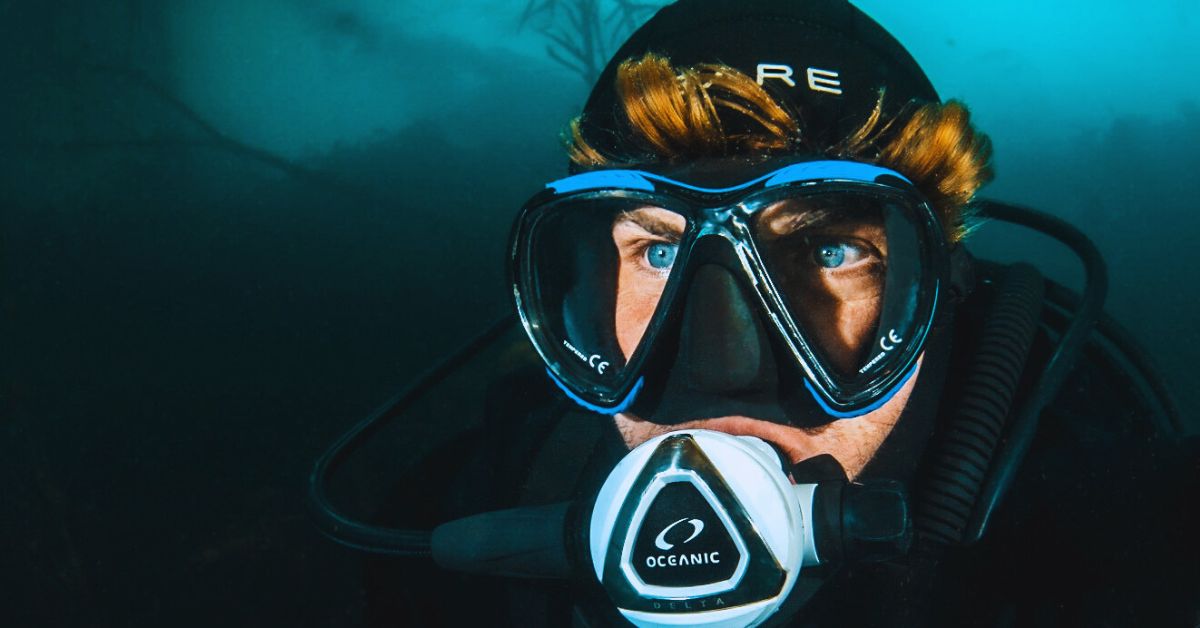
Simply put, a scuba mask is a piece of gear that creates an air pocket in front of your eyes and nose. This lets you see clearly underwater. It’s basically like carrying a tiny bubble of air on your face.
Here’s something crucial that trips up a lot of beginners: it’s a mask, not goggles. This isn’t just diving semantics being snooty.
Goggles only cover your eyes, which is actually dangerous for scuba diving. As you descend, the water pressure increases and would squeeze those goggles against your eye sockets like a really uncomfortable vice grip.
A proper scuba mask encloses your nose too, which allows you to equalize the pressure inside the mask by exhaling through your nose.
Scuba Terminology for Masks
Before we dive into the different types scuba diving masks, let’s break down what the different parts are called.
Skirt:
The skirt is the soft, flexible part of the mask that creates a seal against your face. It’s like the gasket on a jar lid, but for your face. This piece is typically made of silicone (the gold standard) or sometimes rubber, but silicone is definitely the way to go.
The fit of the skirt is the single most important factor for preventing leaks and ensuring comfort. A good seal is absolutely crucial. It’s what keeps the ocean out of your mask.
Frame:
The frame is the rigid structure that holds everything together. It’s the skeleton of your mask, connecting the lens to the skirt. It determines both the mask’s durability and overall size. Some masks are built like tanks, others are sleek and minimalist. It’s all about preference here.
Lenses:
These are the glass or plastic windows you look through to see all the underwater magic. And here’s a non-negotiable: they should always be made of tempered glass. Why? Because if they break, tempered glass shatters into tiny, relatively harmless pieces instead of turning into underwater daggers.
The lenses dictate your field of view and, in many cases, can be replaced with prescription lenses for those who can’t tell the difference between a sea turtle and a large rock without glasses.
Strap:
The adjustable band that holds the mask on your head. Here’s a pro tip that’ll save you from the dreaded “mask squeeze”: the strap should hold the mask gently, not like it’s trying to permanently attach itself to your skull. A common beginner mistake is overtightening the strap, thinking it’ll prevent leaks. Plot twist: it actually causes them by deforming the skirt out of its proper shape.
Nose Pocket:
This is the part of the skirt that covers your nose, and it needs to be easily accessible so you can pinch your nose for equalization. If you can’t reach your nose through the mask, you’re going to have a bad time when your ears start being squeezed by the water pressure.
Types of Scuba Masks
Now for the fun part! We’ll go into the different flavors of underwater face gear. Each type has its own personality and purpose.
Single-Lens Masks
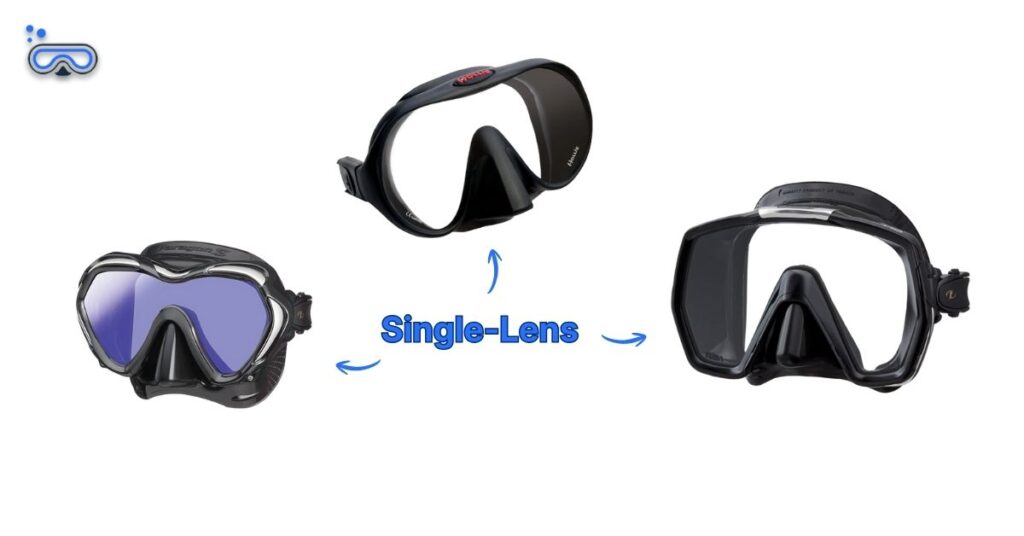
These are the wide-screen TVs of the mask world. They’re one big, continuous piece of tempered glass that offers an unobstructed, panoramic view of your underwater surroundings.
They’re best for divers who prioritize that wide-open, cinematic underwater experience and have perfect vision or use contacts.
Pros:
- Wide Field of View: Makes you feel like you’re watching nature’s IMAX theater.
- Classic Look: Simple design that never goes out of style.
- Reliable: Fewer potential leak points.
Cons:
- No Vision Correction: Can’t accommodate prescription lenses.
- Bulkiness: Can feel larger and heavier on your face.
- Equalization: Higher internal volume means more air to equalize.
Dual-Lens Masks
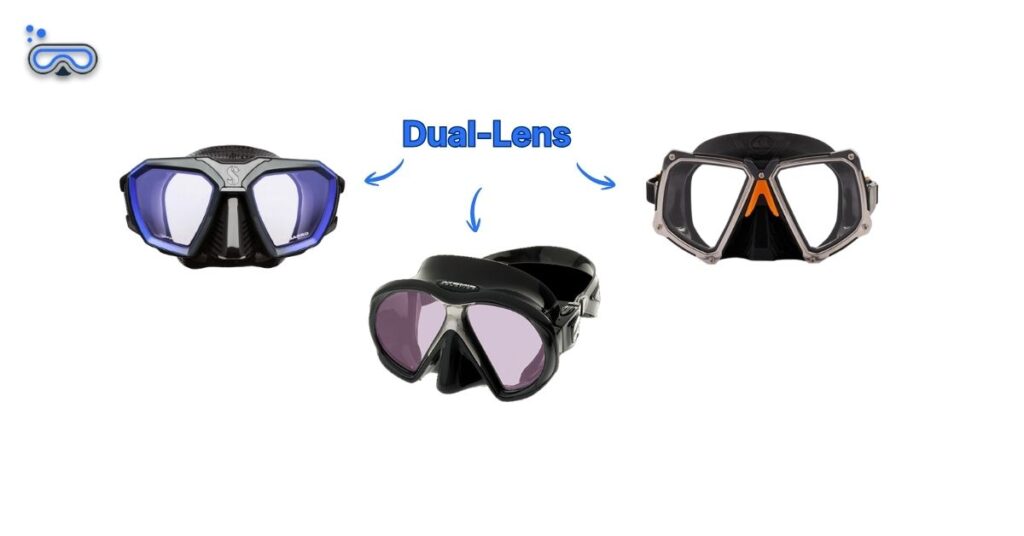
The Swiss Army knife of masks. These are the most common type featuring two separate lenses (one for each eye). They’re popular for good reason: they just work.
Theyr’e best for the majority of divers, especially those needing prescription lenses or who prefer a lower-profile, easier-to-manage mask.
Pros:
- Lower Internal Volume: Easier mask clearing when water sneaks in.
- Vision Correction: Option to install prescription lenses.
- Compatibility: Generally fit a wider variety of face shapes.
- Equalization: Less air space to equalize.
Side Window Masks
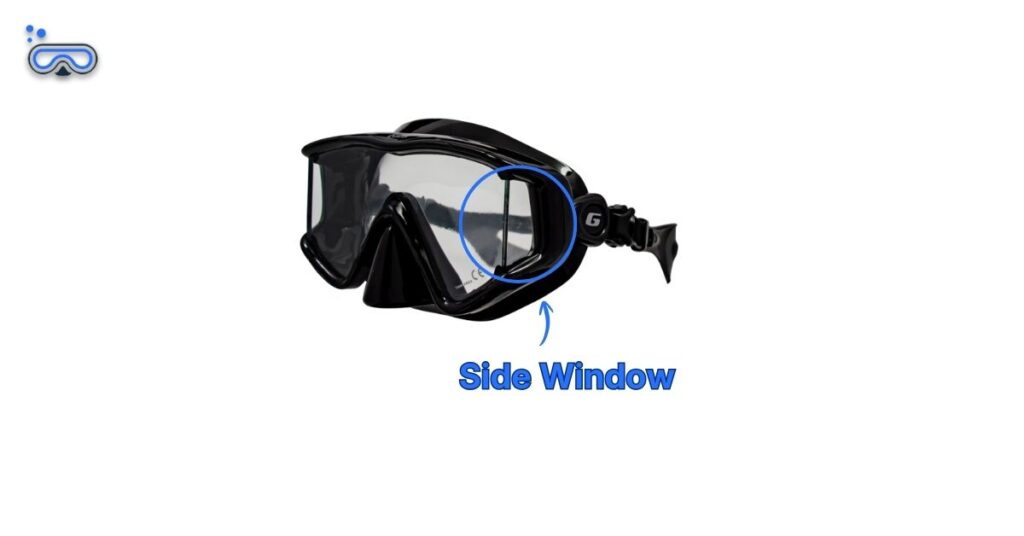
These are like having peripheral vision superpowers underwater. They feature small additional windows on the sides of the main lenses, basically giving you eyes like a hammerhead shark.
They’re best for divers who want the widest possible field of view and don’t mind a slightly bulkier mask profile
Pros:
- Wide Field of View: Greatly expanded peripheral view.
- Increased Focus: Reduces that tunnel vision feeling that some masks can create.
- Helps with Claustrophobia: Great for nervous divers who like to see everything around them.
Cons:
- Bulkiness: Increased internal volume and drag through the water.
- Failure Points: More glass means more points of potential failure or leakage.
- Glare and Reflections: Side windows can sometimes create distracting glare or reflections.
Unless you really must have a high-volume mask, I would say the side window is more gimmicky than anything. I used it for years and really didn’t notice much of a visual difference when I switched to low-volume.
Editor’s Note
Low-Volume Masks
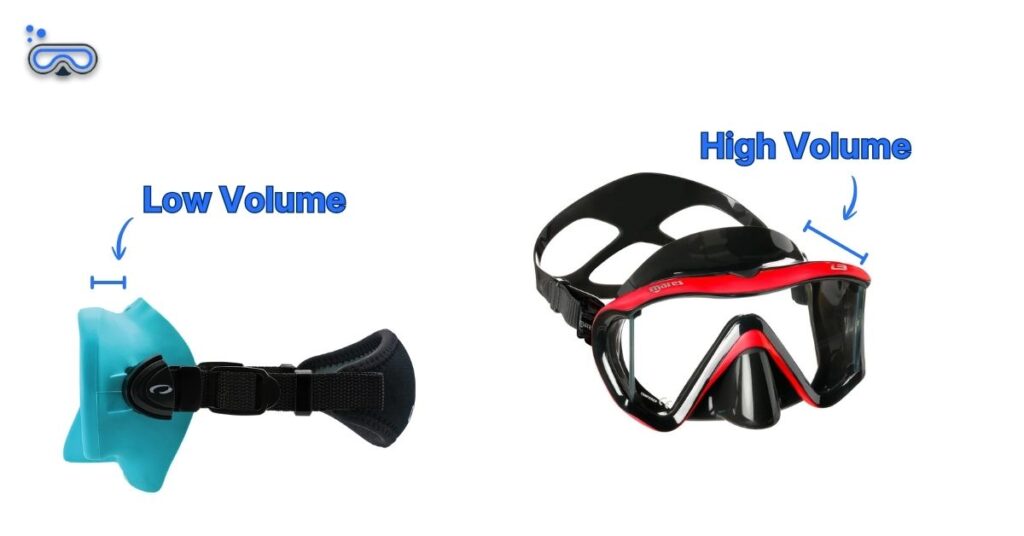
These are the sports cars of the mask world, designed for performance. They sit very close to your face, minimizing the amount of air inside.
They’re best for experienced divers, underwater photographers, tech divers, or anyone who wants a compact mask.
Pros:
- Mask Clearing: Extremely easy to clear water from
- Low Internal Volume: Less clunky than larger masks
- Small Size: Compact profile that’s excellent for underwater photography
- Equalization: Less air space means quicker equalization
Cons:
- Claustrophobia: Can feel claustrophobic to some divers
- Fitment: May not fit all face shapes comfortably
If you’re coming from a high volume mask, the low volume mask takes a bit to get used to. I was surprised by how fast the mask squeeze came when I first tried on a low volume mask. Don’t worry, though. You’ll get used to it in time.
Editor’s Note
Frameless Masks
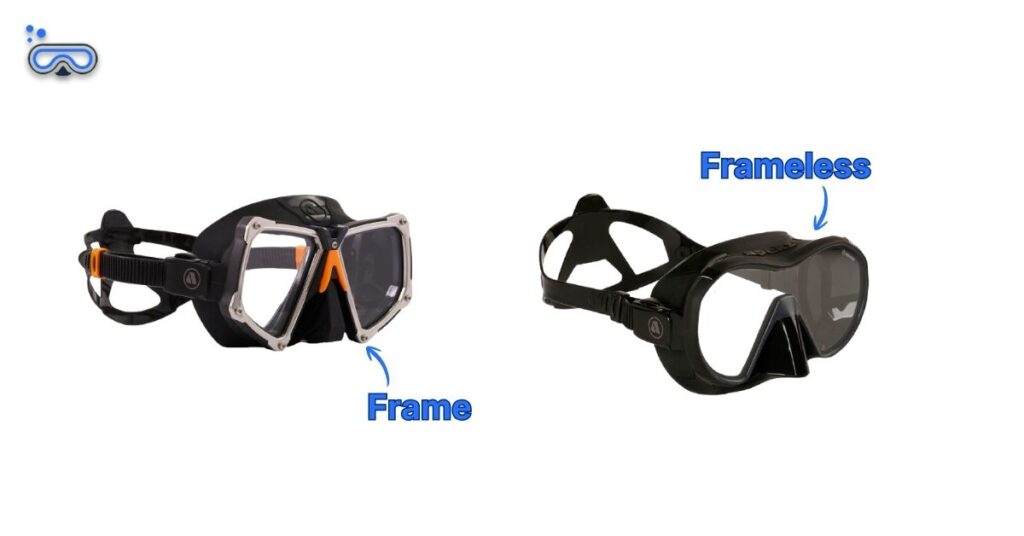
The minimalists’ dream. These masks have the skirt attached directly to the lens without a traditional rigid frame.
They’re best for travel divers, minimalists, and those who want the absolute lowest profile mask possible.
Pros:
- Compact: Extremely low profile and lightweight
- Wide Field of View: Great field of view with minimal obstruction
- Thinness: Easy to pack for travel
- Low Internal Volume: Often have very low internal volume
Cons:
- Potential Durability Issues: Can be less durable due to the lack of frame protection
- Limited Vision Correction: Fewer options for prescription lenses
- Fitment Issues: May not fit all face shapes as well
Corrective Lens Masks
The holy grail for those who are practically blind without glasses. These masks are designed to accommodate prescription lenses, either permanently installed or as drop-in inserts.
They’re best for Divers with vision impairments who want the clearest possible underwater experience.
Pros:
- Vision Correction: Crystal clear vision without the hassle of contacts
- More Details: Can read your gauges and actually see the details of sea life
- Comfort: No more squinting underwater like you’re trying to solve a really difficult puzzle
Cons:
- Expensive: Higher initial cost
- Limited Availability: Not available for all mask models
Things to Look For
No matter which style you choose, here are some things you’ll want to keep in mind:
Suction Test: This is the golden rule of mask fitting. Always do the suction test before buying a mask.
Place the mask on your face without the strap, inhale lightly through your nose, and let go of the mask. A good fit will create a seal and the mask will stay on your face without you holding it, kinda like it’s been magnetized to your head. If it falls off or you feel air leaking in, that mask is not for you, no matter how cool it looks.
Comfort: The mask should feel comfortable from the moment you put it on. It shouldn’t press uncomfortably on your forehead, under your nose, or anywhere else on your face. If it feels weird in the dive shop, it’s going to feel absolutely terrible after 45 minutes underwater.
Field of View: What are your diving style and preferences? Do you want to feel like you’re watching underwater IMAX (go for a single lens or side windows) or do you want a low-profile setup that’s easy to manage (dual lens or low volume)?
Strap Type: You’ll be wearing this thing for long periods, so strap comfort matters. Standard silicone straps work fine, but neoprene or fabric straps with quick-release buckles are more comfortable and easier to adjust with thick gloves.
Skirt Color: This might seem superficial, but skirt color can actually affect your diving experience. Black skirts help reduce distracting glare and reflections. Clear skirts let in more ambient light, which can make the mask feel less claustrophobic but create more glare.
Common Questions About Scuba Masks for Beginners
Can I use swimming goggles for scuba diving?
No. Swimming goggles do not cover your nose, which means you cannot equalize the air pressure inside them as you dive deeper. This can lead to a painful mask squeeze.
What is the benefit of a black silicone skirt vs. a clear one?
Black skirts block side light and reduce glare/reflections, while clear skirts allow in more ambient light to help divers feel less claustrophobic.
How do I know if a scuba mask fits properly?
Perform the suction test: Place the mask on your face without the strap and inhale slightly through your nose. If the mask stays on your face without being held, it has a good seal.
Wrapping Up
My first mask was the Mares i3. During my Open Water cert, I wanted to everything to match, so I bought everything Mares. This masked served me well for a long, long time. Eventually, I learned about frameless and low volume options and decided to give them a try. I got the Oceanic Shadow, but couldn’t get use to the low volume early on and just kept it stuffed in my pockets. Eventually, I grew to love low volume and now I’ve upgraded to a SCUBAPRO D-Mask.
Editor’s Note
The best types of scuba masks are the ones that fit your face perfectly. You could buy the most expensive, feature-loaded mask on the market, but if it doesn’t seal properly on your unique face shape, you’ll be spending more time dealing with leaks than enjoying the underwater scenery.
- For Simplicity and Versatility: A dual-lens mask always works.
- For Travel: Look into a frameless mask that packs easily.
- For Maximum View: Single-lens or side window masksare great choices.
- For Glasses Wearer: Corrective lens masks are a must.
The best way to know for sure is to try them on. Your local dive shop can help you find a mask that fits comfortably and matches your diving needs.
You can also check online at shops with great return policies and fit guarantees. This is a super convenient way to do it if you don’t have any local shops in the area.
Don’t be intimidated by all the options out there. You’ll know when you’ve found the right one!
A dive mask is just one part of the puzzle. To learn what else you need in your kit, check out our guide here:
Or if you’re ready to pick up your first, we’ve put together a list of our favorites: