How to Choose Scuba Gear for Beginners 2026 | Public Safety Diver’s Tips | Scuba Space


Written by our lead diver at Scuba Space, a PADI Master Scuba Diver and Law Enforcement Public Safety Diver with 12+ years of professional underwater operations experience.
Let’s talk about scuba gear for beginners. You’ve got questions. We’ve got answers.
You’re browsing for the latest and greatest gear, but you’re overwhelmed by all their specs and features. It’s easy to get lost with the tons of options that are out there.
Don’t worry. This ultimate buyer’s guide will break down what you need to know and make you confident in your purchase.
So, let’s not waste anymore time and get into it!
If you’re not certified yet, be sure to check out our guide on the different types of certs out there:
What To Look For As A Beginner
Before you get lost in a sea of shiny gadgets and cool features, let’s get our priorities straight. As a beginner, the absolute most important things should be fit, simplicity, and a happy wallet.
Fit is paramount. The most expensive BCD in the world is useless if it chafes and the coolest mask means nothing if it leaks. Make sure your gear feels like it was made just for you.
Keep it simple. Your first set of gear doesn’t need to be as complex as a spaceship control panel. Focus on reliable and straightforward equipment you can trust while you’re still getting the hang of things.
Balance quality and cost. You don’t need to spend a fortune. Look for reliable, well-reviewed gear from established brands. A smart purchase now is one that will last you for years of awesome dives. Also, let’s be real. You’re gonna upgrade soon anyways.
Buoyancy Control Device
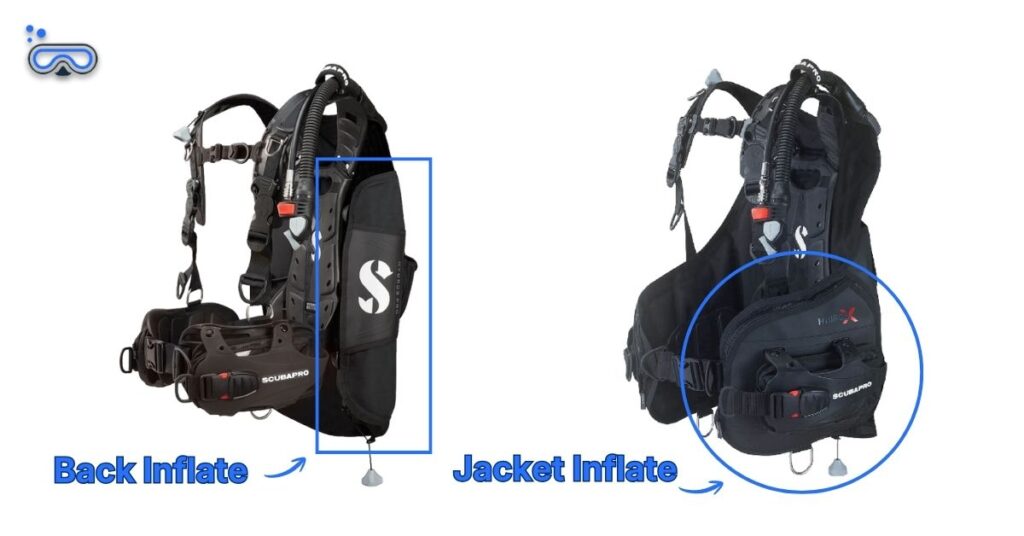
Think of your BCD as your underwater life vest and personal elevator. It’s what holds the all-important tank to your back. It also gives you the ability to float effortlessly on the surface, descend with grace, and hover perfectly in the middle of the water.
Body Design: There are three common styles you can choose from: jacket, back-inflate, or backplate and wing. As a beginner, you’ll want to stick with the jacket-style BCDs. This design makes it easier for you to stay upright while at the surface.
Lift Capacity: How much lift you need depends on what type of diving you’re gonna be doing. Most BCDs will be just fine for recreational diving, but you’ll need a little extra lift if you’re a bigger person or gonna be diving in cold water.
Weight Integration: Some BCDs have integrated pockets that keep your weights secure and your waist free. Lots of people find this to be more comfortable than a classic weight belt. As a beginner, weight integration can help with comfort and is one less piece of equipment to worry about.
Pockets: Pockets are more of a luxury than anything. If you’re the type to want to carry a flashlight or a backup mask, then having pockets will be great. However on most beginner dives, you’ll be perfectly fine with no pockets at all.
Material: Most of the BCDs these days are all basically made from Cordura. There are different types of Cordura, but you’re pretty much set if there’s any mention of Cordura anywhere in the description. Of course, there are other materials like Monprene out there, but those are much more expensive and probably not something you need to pick up as your first beginner set.
My personal BCD path went a little something like this: Zeagle Express Tech > Zeagle Focus > SCUBAPRO Hyrdos Pro. I loved the Express Tech, but I constantly made the noob mistake of over-inflating the bladder early on, causing it to push my face into the water. After being stubborn for 10 years, I finally switched to the Focus so I could relax with a jacket-style. A year later, I convinced the department to get us all SCUBAPRO Hyrdros Pro BCDs.
Editor’s Note
Confused about the different styles? Read our deep dive:
Regulator
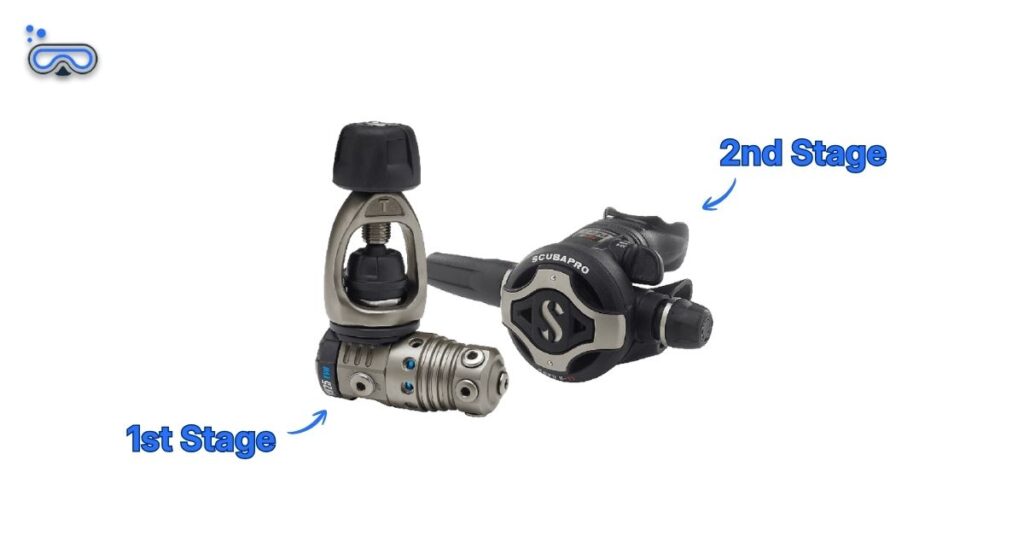
This is your breathing buddy, the little genius that turns high-pressure air from your tank into something you can actually inhale. It’s a crucial piece of gear, so don’t skimp here.
1st Stage Regulator: This is the piece that attaches to your tank. Piston or diaphragm? Balanced or unbalanced? As a beginner, it doesn’t really matter. At this stage, you should just focus on your basics and enjoying your dive rather than min/maxing your equipment.
2nd Stage Regulator: This is the piece that goes into your mouth. This thing actually does matter, but not in the technical way you might think. As a beginner, the most important part of the 2nd stage reg is comfort. You’ll want one that isn’t too bulky and has a good mouthpiece to help with jaw fatigue.
High Pressure Ports: This is the port you plug your submersible pressure gauge (SPG) into. You only need one unless you plan on using air integration with your fancy dive computer.
Low Pressure Ports: At a minimum, your second stage reg and BCD inflator plug in these ports. You’ll need an additional port for an octopus/secondary reg if you’re not using an integrated inflator regulator.
Connection: This will largely depend on what region of the world you’ll be diving in. DIN is the more secure connection, but INT (Yoke) is more common in rental tanks. You can also get DIN with an INT adapter.
Want to get deeper into regs? Check out our guide:
Dive Computer
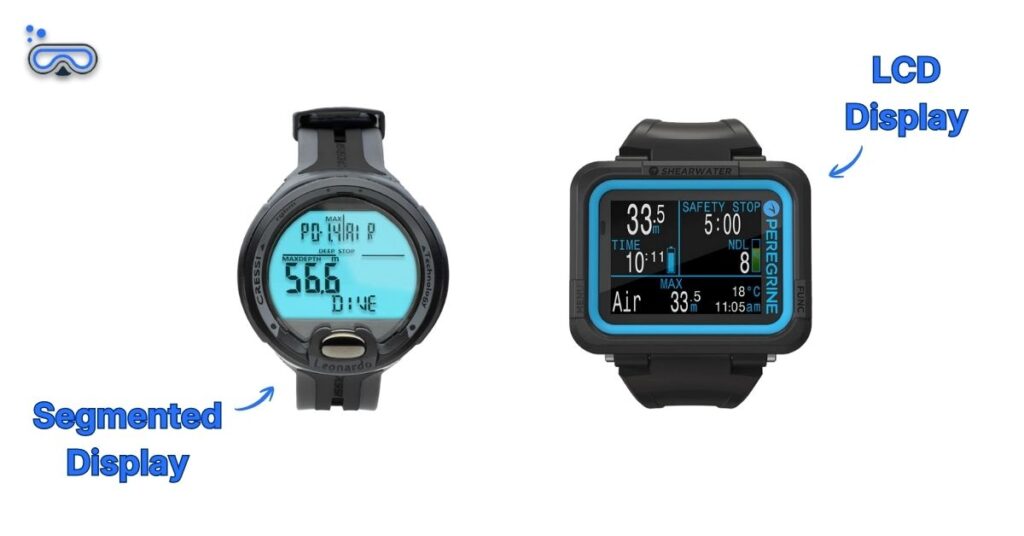
Your dive computer is your underwater brain, your safety net, and your best friend all rolled into one. It’s an absolute non-negotiable must-have.
Display: Beginner, intermediate, advanced diver? Doesn’t matter. This is purely a personal preference. Some people don’t care if the display is segmented like an old Casio watch. Some people want full-on colored OLED. Up to you.
Buttons: Another purely personal preference. Anything works. As long as you get used to navigating it.
Battery: Some people are just bad at charging their devices. These are the same people that walk around with 15% charge on their cell phones. If this is you, stick to user-replaceable batteries. Otherwise, rechargeable batteries are awesome.
Compass: This feature is very nice to have but it’s usually only found on higher-end computers. Use it if you’ve got it. Otherwise, the compass on your dive console works just fine.
Air Integration: Really, really cool. Really, really expensive.
I started with the Mares Puck. The original (similar to this). I used that thing for years until I finally upgraded to the SCUBAPRO Galileo HUD. I chose the HUD specifically for the zero viz diving we do. It was an excellent purchase. I take it with me on all my recreational dives now.
Editor’s Note
Confused by algorithms and nitrox settings? Check out our simplified guide:
Mask
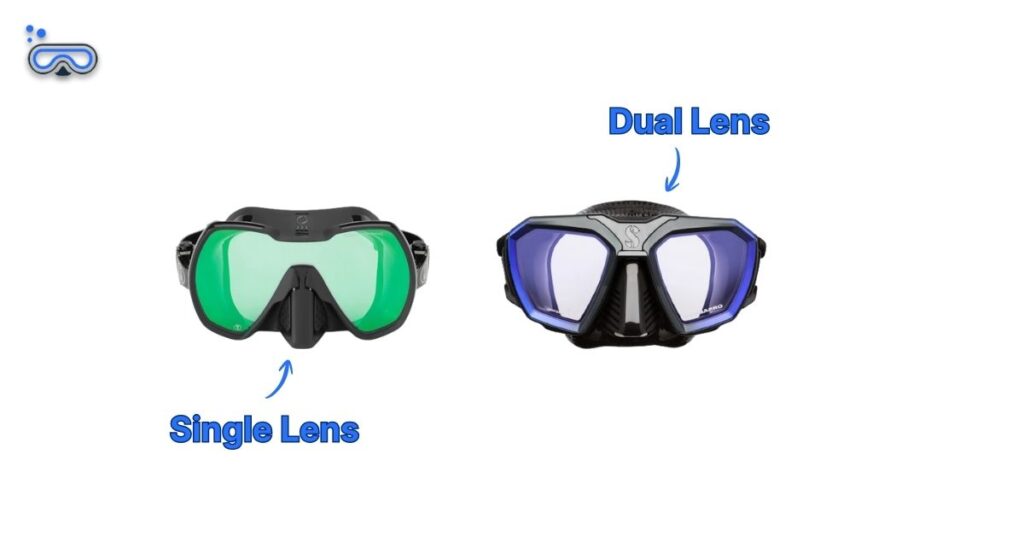
This is your personal window to the underwater world. The only thing that truly matters here is fit. If it doesn’t fit, it’s useless, so don’t get distracted by color or style.
Lens Type: Options are single or dual lens. Want a more panoramic view? Go single-lens. Have bad eyesight and need a prescription? Go dual-lens.
Construction: Two to pick from: framed or frameless. It really just comes down to how it feels on your face. Try them both out and see what you like. Frameless is also great as a backup ‘cus it can be folded down and thrown in your BCD or wetsuit pocket.
Tempered Glass: As of the writing of this article, we haven’t come across any dive masks that weren’t made from tempered glass. There are probably some out there, but we’d recommend to stay away from them. Tempered glass is more resistant to breaks and scratches. Last thing you want is broken glass near your eyes.
Volume: As a beginner, you’ll want to stay with low volume masks. These masks are easier to equalize when you’re descending. They’ll also be way easier to clear if they get flooded.
My upgrade path was Mares i3 > Oceanic Shadow > SCUBAPRO D-Mask. Having only used the Mares i3 early in my dive career, it took me a while to adjust to the low volume of the Oceanic Shadow. I found it kinda awkward that I relegated the Shadow to a back-up mask that I shoved in my pocket for a long time before finally using it full time. Now that I have the SCUBAPRO Galileo HUD, the D-Mask has become my primary and the Shadow is back in my pocket.
Editor’s Note
Want to see the difference between framed and frameless options? Read our guide:
Fins
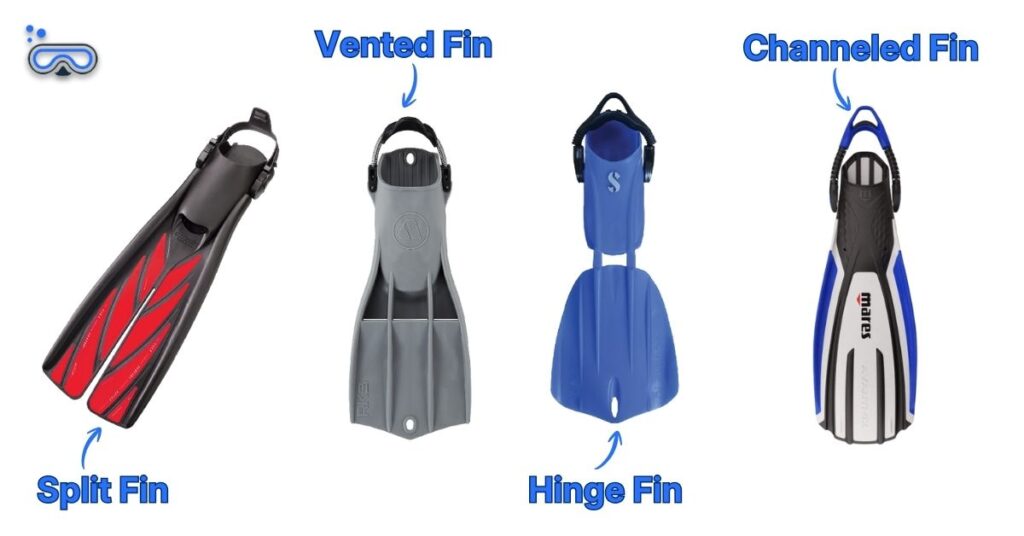
These are your personal propulsion system. They turn a little leg power into powerful forward motion.
Blade Type: The blades on fins can get pretty fancy. If you’re just starting out, just get a simple, paddle blade. No need for anything too intricate yet. As you get more experienced, you’ll start to develop a preference for certain types of blades. Splurge away when that time comes.
Material: Doesn’t matter. You’ll probably lose one of your fins before you break them.
Heel Strap: This matters. Nothing is more annoying than taking forever to don and doff your fins, especially during shore diving when waves are knocking you over. We highly recommend spring or bungee straps.
Length: Personal preference. Shorter fins are easier on the leg muscles and give you better maneuverability in the water. Longer fins generate greater thrust but require more leg strength.
Weight: Lighter weight fins are easier to kick with and won’t put you over the airline baggage check limit.
My first fins were the Mares Avanti Quattro +. They were the only fins I knew for the first half of my dive career. One day, I finally got sick of them getting snagged on everything at the bottom of lakes during searches and decided to get the Hollis F2. It was a sudden change going from long blades to short blades. The F-2’s were great in lakes with no currents, but they struggled in the ocean. I upgraded to the SCUBAPRO Seawing Supernova years later (after a public safety diver training where 90% of the divers had Seawing Nova fins). Now I use the Supernovas for everything, including searching.
Editor’s Note
Unsure if you need split fins or paddle fins? We compare them all:
General Purchasing Tips
Think of buying gear as part of the fun of diving! Don’t rush it and remember these tips.
Try Before You Buy: Many local dive shops have a pool where you can test out equipment. This is the best way to make sure everything fits and feels right before you commit.
Buy from a Reputable Dive Shop: These shops have knowledgeable staff who can help you with sizing and gear selection. They can also offer maintenance and repair services.
Consider Online Retailers: Don’t be afraid to look online either. Reputable stores offer competitive prices and often have great return policies and “fit guarantees.” Just make sure to read the fine print.
Don’t Forget Accessories: Accessories like gear bags, defog spray for your mask, and a surface marker buoy are just as important as the big-ticket items.
Common Questions About Scuba Gear for Beginners
What scuba gear should I buy first as a beginner?
Most divers start with “soft gear” (a mask, snorkel, and fins) because fit is highly personal. After that, we recommend a dive computer. Having your own computer ensures you are familiar with its safety menus and your personal dive history, which is much safer than using a different rental unit on every trip.
Is a Jacket BCD or a Back-Inflate BCD better for beginners?
Jacket-style BCDs are the traditional choice for beginners because they provide a stable “upright” position at the surface. However, back-inflate BCDs are becoming popular with new divers because they allow for better horizontal “trim” underwater and are often lighter for travel.
What does a BCD actually do in scuba diving?
BCD stands for Buoyancy Control Device. Its primary job is to allow you to maintain neutral buoyancy at any depth by adding or venting air from its internal bladder. It also provides flotation at the surface and holds your tank securely to your back.
Why is fit more important than price when buying a mask?
A $200 mask that leaks is useless compared to a $60 mask that seals perfectly. A leaking mask is a huge safety risk for beginners because it introduces an unfamiliar element that distracts you. Always perform a “seal test” by inhaling slightly through your nose without the strap to ensure a proper fit.
Wrapping Up
There you have it! Some tips to help you pick out scuba gear for beginners.
Now that you’re armed with this guide, you can confidently strut into a dive shop or browse online knowing exactly what you’re looking for.
Remember, your gear is an investment in your comfort and safety, and getting it right means you can focus on the important stuff like spotting that majestic sea turtle or just drifting in blissful silence.
So, what are you waiting for? Snag your favorite gear and get ready to dive in style!
Dive deeper into each topic with the links above. Or if you’re ready to buy, we’ve put together a couple sets for you:
Don’t forget your wetsuit either. Learn more about them here:
About the Author
This guide was curated by the Scuba Space lead diver, a Law Enforcement Public Safety Diver and PADI Master Scuba Diver. With 12+ years of professional experience in search, recovery, and rescue, he helps us prioritize gear that balances recreational comfort with professional-grade reliability.
Enjoyed the article? Share it with your fellow divers!