What Is a Scuba BCD? | 2026 Ultimate Guide | Scuba Space

Written by our lead diver at Scuba Space, a PADI Master Scuba Diver and Law Enforcement Public Safety Diver with 12+ years of professional underwater operations experience.
You’ve taken the plunge into scuba, and now you’re faced with a big, bubbly question: “What is a scuba BCD and why are there so many?” Don’t worry, you’re not alone.
In this guide, we’re gonna be answering that question and going into detail about the types of BCDs to make sure you’re not lost in the dark about the subject.
So, let’s not waste anymore time and get into it!
*Scuba Space is a participant of affiliate programs and earns from qualified purchases*
What is a Scuba BCD?
A BCD (that’s a Buoyancy Control Device) is basically your personal underwater superpower suit. It holds your tank and lets you fly, float, or sink on command. Think of it as your scuba sidekick.
These sidekicks come in different styles. Let’s break down the main contenders so you can find the perfect match for your underwater adventures.
Jacket Style BCD
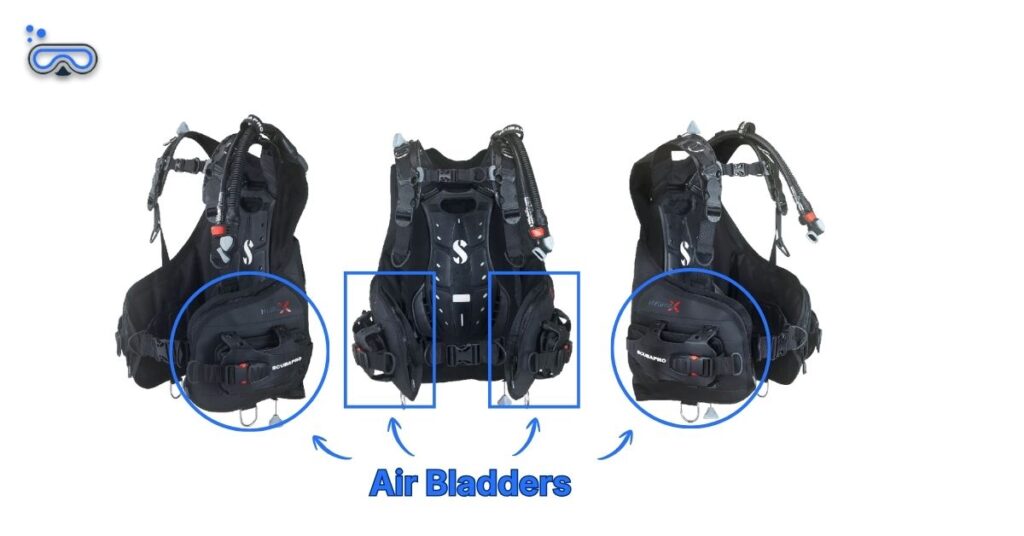
This is the classic, the one you probably saw in your open water course.
It’s like a cozy, slightly puffy vest that wraps you in a warm, buoyant hug. The inflatable bladder surrounds you, giving you lift from all sides.
If the other BCDs are your sleek, high-tech friends, this one is your reliable, comfortable diving buddy.
Pros:
- Surface Stability: It’s super stable on the surface. When you’re floating around waiting for the dive master to give the signal, you’ll stay comfortably upright. No need to worry about accidentally face-planting into the waves.
- Integrated Storage: Pockets! Glorious pockets! Most jacket-style BCDs have them built right in, so you can stash your slate, a spare mask, or that cool shell you definitely aren’t supposed to take.
- Beginner-Friendly: Its intuitive design makes learning to control your buoyancy feel natural. A little puff of air here, a little squeeze there, and you’re a master of bouyancy.
- Integrated Weights: Many models have an integrated weight system, so you can ditch that cumbersome belt. Your hips will thank you later.
Cons:
- Bulky Profile: When fully inflated on the surface, these BCDs can feel a little bulky and restrictive. You might feel a bit like you’re wearing a giant blood pressure cuff.
- Increased Drag: Its design can create a little more drag, meaning you might have to put in a tiny bit more effort to glide through the water. But hey, it’s a good workout!
I highly recommend going with a jacket-style BCD as your first one. Being fresh from your Open Water cert, you’ll have a million things on your mind. Trying to keep your head above the water should not be on that list. Jacket-style makes sure you’re easily floating upright.
Editor’s Note
Back Inflate BCD
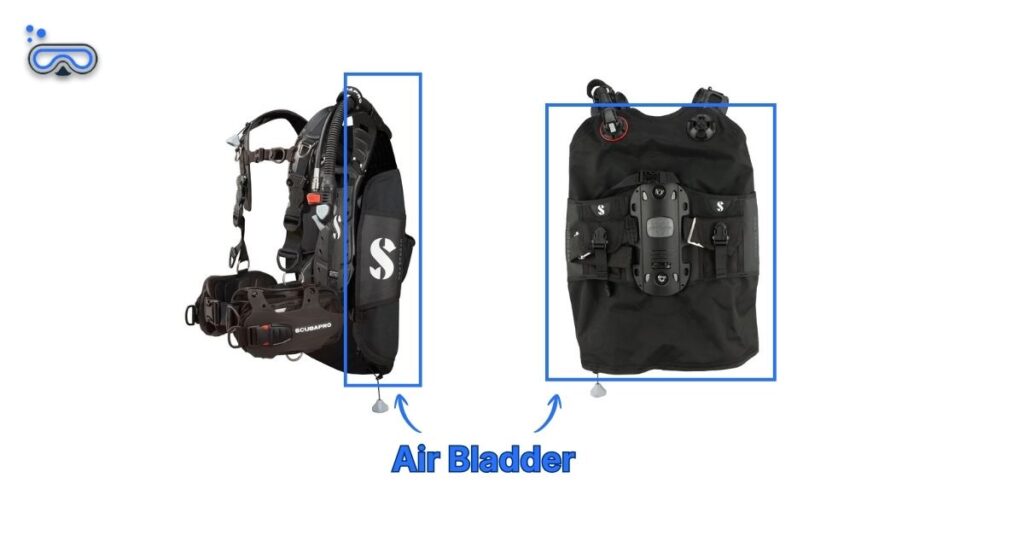
If you prefer a sleek, uncluttered profile, the back-inflate is the way to go.
The inflatable bladder is only on your back, leaving your chest and sides free and open.
Think of it as a backpack with a lift system.
Pros:
- Streamlined Design: This BCD is the streamlined ninja of the diving world. With less drag, you’ll feel like you’re gliding effortlessly through the water. It’s a favorite of those who need to move with precision.
- Enhanced Mobility: No bulky vest means your arms and chest are free to move. This is great for those who feel restricted by the jacket style.
- Superior Trim: With the air bladder behind you, it’s easier to maintain that perfect, horizontal “trim.” This is key to becoming a super-efficient diver and saving energy.
Cons:
- Surface Instability: On the surface, with all the air in the back, you might feel like you’re being gently pushed forward. You’ll need to use a little effort to keep yourself upright. It’s not a big deal, but it’s something to be aware of.
- Limited Storage: Many back-inflates have fewer pockets and storage options than their jacket-style cousins. Some even have none. You might need to get creative with clips and attachments for your gear.
- Learning Curve: Getting used to the different feel of this BCD can take a few dives, but once you master it, you might never go back.
My first BCD was a back inflate (Zeagle Express Tech). I loved how easy the BCD was to put on, but being so new to diving, I constantly over inflated the bladder, which caused it to constantly push my face forward into the water. I got sick of this and eventually switched to a jacket-style. A few years later, I finally figured out that I didn’t need to fully inflate at the surface to float comfortably. Now I’m back to using a back-inflate BCD (SCUBAPRO Hydros Pro).
Editor’s Note
Backplate & Wing BCD

If you love tinkering, customizing, and building things to be exactly what you want, then meet the backplate and wing.
This is a modular system with a rigid backplate, a separate wing-shaped bladder, and a harness.
It’s the diver’s equivalent of a high-performance sports car, basically built from the ground up for maximum performance.
Pros:
- Highly Customizable: Every single piece is swappable. Need more lift for a dive? Swap out the wing. Want to change the harness? Easy peasy. It’s built to fit you, not the other way around.
- Exceptional Durability: These systems are incredibly durable and can last for a lifetime of diving. Think of it as a one-time investment in a piece of gear that will never let you down.
- Perfect Trim: The backplate acts as a counterweight, helping you achieve a flawless horizontal trim in the water. This is the go-to for technical divers who need total control.
- Travel-Friendly: Its modular design and options for a lighter backplate make it great for travel. Easy to pack while staying under airline weight limits.
Cons:
- Assembly Required: It’s a little more complex to set up initially, so it’s not a “grab and go” option.
- Pricey: The initial cost is higher than other BCDs, so it’s a bigger commitment for a new diver.
Things to Look For
No matter which style you choose, here are some things you’ll want to keep in mind:
Fit and Sizing: This is the most important one. A BCD that doesn’t fit correctly will be uncomfortable and a hassle to use. Try it on over your wetsuit!
Integrated Weight System: If you’re looking to ditch the bulky weight belt, look for a BCD with built-in pockets for your weights. It’s a game-changer for comfort.
Dump Valves: These are your emergency release buttons for air. Make sure the BCD has multiple dump valves that are easy to reach and use with either hand.
Lift Capacity: Check the lift capacity to make sure it can handle the weight of your tank and other gear, with a little extra to spare.
Durability: Look at the fabric’s denier. A higher number (like 1000D) means it’s tougher and will stand up to more scrapes and bumps.
Common Questions About BCDs for Beginners
Which BCD is best for a beginner diver?
Most professionals recommend a jacket-style BCD for beginners because it provides maximum stability at the surface, keeping the diver comfortably upright while waiting for boat pickups or gear adjustments.
What is the main difference between back-inflate and jacket BCDs?
A jacket-style BCD inflates around your torso for surface comfort, while a back-inflate BCD places the air bladder behind you to allow for a better horizontal swimming position (trim) underwater.
Is a backplate and wing BCD too advanced for a beginner?
While modular and highly durable, backplate and wing systems have a steeper learning curve for assembly and trim control. They are excellent long-term investments but require more patience to master than a standard jacket BCD.
Wrapping Up
Picking a BCD is a bit like choosing a wand in Harry Potter, the right one just feels right.
While a jacket-style is a great starting point, you might find that the streamlined feel of a back-inflate or the ultimate customization of a backplate and wing system is more your style.
The best advice? Go to your local dive shop, try a few on, and see what feels most comfortable. Huge plus if they have a pool that you can jump into.
You can also check online at shops with great return policies and fit guarantees. This is a super convenient way to do it if you don’t have any local shops in the area.
Don’t be intimidated by all the options out there. You’ll know when you’ve found the right one!
A BCD is just one part of the puzzle. To learn what else you need in your kit, check out our guide here:
Or if you’re ready to pick up your first, we’ve put together a list of our favorites:
Enjoyed the article? Share it with your fellow divers!